Are you working because you want to or because you have to? During our early careers we work to earn enough money to support ourselves and our families. As we journey into the second half of life, our feelings about work may change.
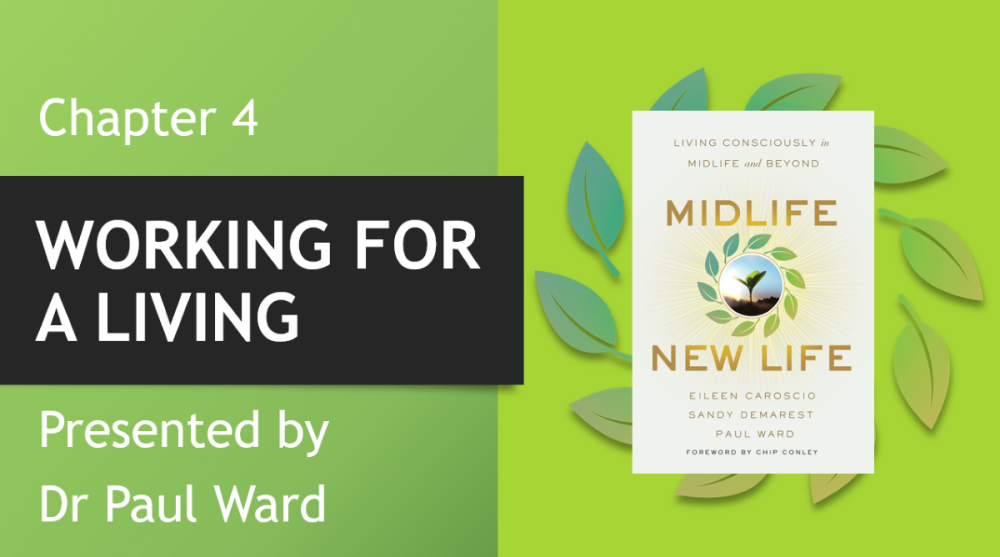
In this chapter of the book, we explore working for a living and then, in the next chapter, working for fulfillment—and how we might begin consciously examining the kind of balance we want to find as we move into the second half of life. Working for a Living is the fourth chapter of the book, Midlife, New Life: Living Consciously in Midlife and Beyond.
A Continuum of Working
Work exists on a continuum ranging from working for money to working for fulfillment. Early in our careers, we focus on our working as a source of income for paying mortgages and supporting families. But as we progress, many of us shift toward seeking meaning and purpose in our work. The reality for most of us, however, is that we operate somewhere in the middle, balancing financial needs with the desire for a meaningful contribution.
The Shift Toward Meaningful Work
Work in midlife and beyond can become less about a job we must do and more about identity and purpose. People increasingly ask: How does my work have meaning? Can I contribute to something that matters—both personally and to the world around me? This psychological shift reflects deeper life changes: we’re living longer, working longer, and reconsidering what retirement truly means.
Mandatory retirement, once standard, is becoming less universal, and for many professions, the traditional retirement model has become obsolete. The benefits of working longer extend beyond financial necessity. They include mental stimulation, continued personal development, and meaningful social engagement.
Reimagining Your Career Path
As we contemplate our next phase of our lives, several options emerge. We might grow our existing careers with new advancement opportunities. Career switching, once uncommon, is increasingly popular. Entrepreneurship presents another compelling avenue—starting a business with decades of accumulated skills and wisdom behind you.
Those considering entrepreneurship need to assess essential success factors: a well-built social network, financial capital, relevant experience and skills, possible partnerships, and resilience. Success requires grit and a strong work ethic, but the rewards can be substantial.
Identity and Personal Branding
Who are you? Who do you want to be? These aren’t questions reserved for twenty-somethings. Personal branding becomes crucial as you reposition yourself professionally. Whether you’re mentoring younger colleagues or learning from them, your identity in the workplace matters. The modern workplace increasingly features multi-generational teams—sometimes four or five generations working together. This diversity offers immense learning opportunities if we’re open to them.
Practical Reflection Questions
As you consider your path forward, ask yourself: Where am I on the working-for-a-living journey? How does my financial health influence my choices? What am I being called to do? What’s possible in both the short and long term? What’s most important for your work life?
Working for a living and working for fulfillment aren’t mutually exclusive. The opportunity is “walking between both worlds” — integrating financial necessity with purposeful contribution. In the Chapter 5 video we will be exploring Working for Fulfillment, but for now …
Watch this video to learn more about Working for a Living: